 Newsletter
 Shop
Shop Login
Login Menü
Menü




 4/2026
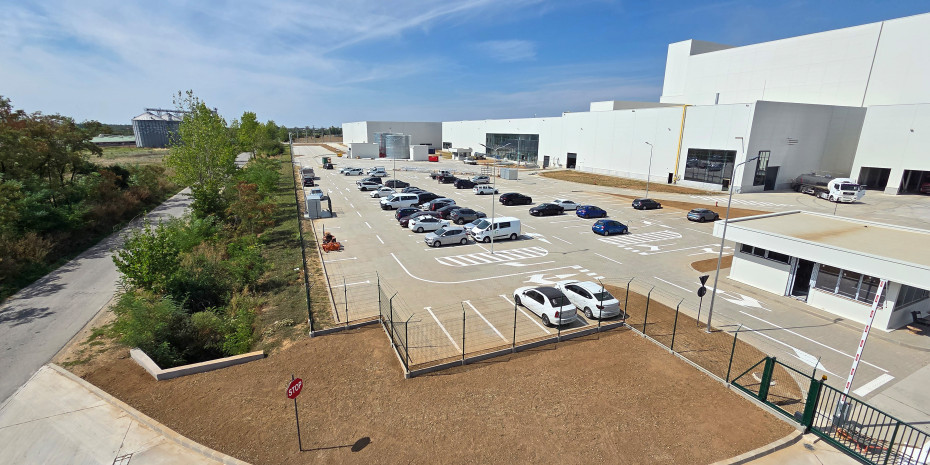
The Ghent-based group United Petfood has expanded to 30 production sites through acquisitions and new builds, including another new facility in Răcari (Romania). Most recently, in July, the company acquired a 50 per cent stake in the German premium wet food producer SmartPetPro. Previously United Petfood, in collaboration with Lider Petfood, a Turkey-based international pet food manufacturer, acquired the dry production facility in Kīırklareli (Turkey) from Maya Company Pet Food, and the Jupiter production facility in Drummondville (Canada) from the Legault Group. CCO Koen Van Broeck put group turnover for the current year at around €1.7 billion.
What does your network in central and eastern Europe look like today?
In dry pet food we have two plants in Poland, one in Hungary and one existing plant in Romania, and in the coming weeks we will open a brand new facility in the Romanian market. That gives us four plus one dry sites.
In wet food we opened a fully automated pouch plant last October in Radom, an hour from Warsaw, where we will centralise our entire pouch production. Close by, in Pionki, we have invested in a new treat facility for air-dried meat snacks, bone broth and liquid snacks. So we will have six facilities in that region.
Why concentrate so much capacity there?
It is a fast growing market. We see growth in pet ownership and, with it, demand for high quality products, and the markets are professionalising. At the same time there is very good access to fresh raw materials – eastern Europe has big chicken and meat producers, and locally grown fresh meat matters to us. We are not only investing in capacity, this is a long-term engagement for the entire region.
What will the new Romanian plant produce, and for which market?
It is a new state-of-the-art dry pet food facility and will double our actual capacity in that market. Total capacity of the new plant will be around 150,000 tonnes a year. It will serve the wider region – Romania and the neighbouring countries – although the Romanian market itself will be very important.
We have chosen a decentralised model, producing as close as possible to the end user with locally sourced raw materials. At group level, though, we invest in the same technology: our extruders, dryers and coaters follow a group standard, so the plants are interchangeable and an internationally developing customer can be supplied from different sites with local raw materials but the same equipment.
Private label penetration in central and eastern Europe is still well below westernEuropean levels. How quickly is that gap closing?
There is quite some inflation in those markets and the buying power of the end consumer is not growing that much at the moment. But where there is economic growth, pet food immediately becomes more important. We saw the same in western Europe 15 years ago, when a pet was fed with table scraps and today is a family member with its own diet. Big western European retail chains are growing in the east, there are the locally anchored stores, and pet specialty is expanding quite fast as well. I am convinced it will go quite fast, but I cannot give you a date.
United Petfood presents itself as an exclusive private label producer, yet it also owns several well-known internal brands. Does your description still hold?
It does. We act as a co-manufacturing partner. Brand ownership remains with the customer, who takes care of marketing and sales; our responsibility stops the moment the products go to their distribution centre.
We produce a lot of brands, all with their own customised recipes – we do not have one recipe book. But we like to avoid becoming a competitor of our own customers. If you sell your own brand and co-manufacture for another one, that is quite hard to defend.
Is there overcapacity anywhere? Are closures on the table?
Not at all. We have an intensive capex programme and are reinvesting a lot in existing facilities, to increase capacity and to respond to market demand. If pack sizes and typologies change, we adapt the plants to what the market needs today. We are not there to close plants, we are there to grow the business.
Much of this points at grocery and discount. What role does the specialist trade play?
A very important one. Roughly 50 per cent of our turnover goes to grocery retail and the other 50 per cent to specialised retail, specialised brands, e-commerce and independent brands. The dominant players are focusing more and more on their own brands, so it is key for us to support them and to drive new product development for them. When I present to customers, I always talk about co-creation.
Where are raw material costs heading?
The markets are really unstable. We see big volatility again in prices and in availability, which is quite hard for a co-manufacturer to handle. Prices are significantly increasing and this in combination with an inflation increase. Raw materials, utilities, packaging – it is all linked to oil and to the geopolitical situation, and the market can react fast and in different directions. That is a challenge for our customers as much as for us.
Is the EU packaging regulation PPWR affecting your business?
Yes, the impact is big but as a co-manufacturing partner we have an advisory role, we are not the brand owner. We have to make sure we hold the right technical information from the supplier for every packaging we use. But the final responsibility is linked to brand ownership. We do have a lot of knowledge within our group and support the customer as much as possible to guide them through the new legislation.
Where will the next growth come from?
We continue to see strong growth opportunities across several markets and categories. Within Europe, Central and particularly Eastern Europe offer significant potential, while Western Europe is a more mature market.
Beyond our established home markets in Europe, Turkey, the US and Canada, we see growing opportunities in other export markets. Our experience shows that having a strong local production footprint can be an important driver for successfully developing a region, allowing us to stay close to our customers and respond to local market needs.
At the same time, growth is not only geographical. We see strong momentum in the wet pet food segment and particularly in the cat food category, both of which offer significant opportunities for further expansion.
The questions were asked by Oliver Mengedoht
This is the long version of the article from the print edition of PET worldwide 4/2026.





 Newsletter