
 Newsletter
 Shop
Shop Login
Login Menü
Menü




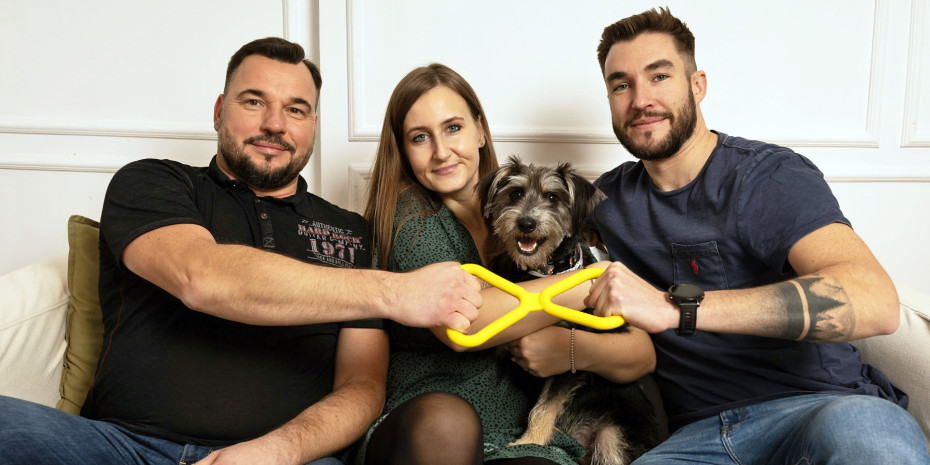


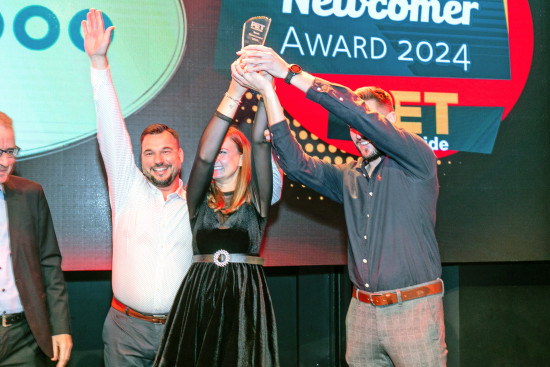
Looking back – what memories do you associate with winning the Best Newcomer Award?
Above all, it was an incredibly emotional moment for us. It was our first international competition and one of the first opportunities to introduce Fiboo to a wider audience outside Poland.
Two years ago, we were really just at the beginning of our international journey. We were only starting to discover the global pet industry, build our first international relationships and learn how different markets work.
From the very beginning, I strongly believed in Fiboo and that we had created a brand with real international potential. Of course, we went to Brussels hoping for a good result, but we definitely didn’t expect to win.
That’s why the moment when the results were announced was so special. I remember hearing the name Fiboo and, for a few seconds, we simply couldn’t believe it. I still remember the goosebumps.
Looking back two years later makes this memory even more special. Back then, we were at a completely different stage. We had big ambitions, but there was still so much ahead of us. Today, I can see just how much has happened since that evening.
How did you find the initial period following your victory?
Suddenly, Fiboo started getting much more attention. Many people from the pet industry reached out to us, we made new contacts, and had a lot of really interesting conversations.
For a young brand, this kind of recognition is incredibly important because it gives you something that cannot be built overnight - credibility. This is especially valuable when you are entering international markets and potential partners don’t know you yet.
Of course, nothing happens overnight in our industry. Sales processes, especially international ones, can take months and sometimes much longer. Interestingly, some of the relationships and conversations that started after that award ceremony are still developing today.
The award didn’t change our company within this evening, but it definitely opened a few doors. The rest was up to us.
Many successes followed, but with them came responsibilities and challenges. What raised the biggest questions for you?
We quickly realized that if we were serious about growing internationally, we couldn’t focus only on sales.
You can have a great product, good marketing and a growing number of customers, but if your production, logistics, and organization are not ready for growth, it can quickly be-come a problem.
So while growing our sales, we also started preparing the whole company for a much bigger scale. I immediately had a long list in my head of things we needed to improve, expand or completely change.
We always wanted to stay one step ahead of our growth. Instead of waiting for production to become a bottleneck, we wanted to prepare it for the next stage in advance.
And I think this is one of the biggest challenges for a growing company - making decisions and investing not only based on where you are today, but most importantly on where you want to be in two or three years.
As demand increased, so did the need to scale up, expand production capacity and manage the supply chain – how did you tackle this?
We had an advantage here thanks to our previous experience. Even before Fiboo was created, we had been working in manufacturing for many years, so from the very begin-ning we knew that growing the brand had to go hand in hand with growing our production capacity.
Our production already had some extra capacity which allowed us to manage the first stage of growth comfortably. But over the last two years, we have taken another big step forward.
We expanded our machinery, grew our production team and opened new warehouse and packing facilities. This allowed us to increase our capacity to prepare and fulfil orders while adding several hundred new pallet spaces to our warehouse.
These are things that the end customer usually doesn’t see. They see the finished product on the shelf. But to make sure that product reaches the right place at the right time across many different markets, you need a very wellprepared organization behind the brand.
This is especially important to us because we want to grow fast, but in a controlled way.
When you first set up the business, how did you think Fiboo would change your life – and how has it actually turned out today?
Fiboo was really born from a desire to create something of our own.
Before we started this project, my business partner Paweł and I had been working in manufacturing for many years. We designed and produced plastic components for our clients.
I really enjoyed this work. It was technical, creative and very rewarding. But in the end, we were always creating someone else’s product.
For a long time, I had wanted to walk into a store one day, look at the shelf and see a product that we had created from start to finish - from the first idea through design and pr-duction, all the way to building the brand.
And that is really how Fiboo was born.
From the beginning, Paweł and I complemented each other very well. I focused on creating the brand concept, communication and direction of growth while Paweł focused mainly on the product, technology and production process.
Did I expect Fiboo to change my life? I knew I wanted to build a big brand and I strongly believed in the project from the very beginning. But I didn’t expect that so quickly we would be talking to partners from so many different countries and thinking about Fiboo on such an international scale.
I think the most interesting thing is that every goal we achieve very quickly stops feeling like the finish line. Instead, it becomes the starting point for the next one.
Today, our ambitions are definitely much bigger than they were two years ago.
What differences did you notice when building the brand internationally – compared to your home country?
We’ve learned that there is no such thing as one single international market.
Every country is different. The culture is different, the sales structure is different and so is the way business partners make decisions. The behavior and expectations of customers are also different.
Something that works really well in Poland may not neces-sarily work in Germany, France or another market. Sometimes the differences are about the products, sometimes colors or packaging and sometimes the way you communi-cate or even the sales model itself.
In our home market, we do many things naturally because we know the customer and understand the business environment. When entering a new country, you first need to learn how that market works and, most importantly, listen to the people who know it better than you do.
We are still learning this every day. We talk to our partners, observe how customers react and learn from it.
It’s a very interesting process because as we’ve grown Fiboo internationally, we’ve also started to look at our own brand from a much broader perspective.
Are there any lessons you’d like to pass on to other founders and start-ups in the pet industry?
Patience and persistence.
Today, we often hear stories about companies that became successful very quickly. But in reality, building a brand is usually a much longer process. You can’t build a strong brand in one or two years. It takes time, consistency and many decisions that may only show results several years later.
The second thing is being ready to do many different things.
A startup is incredibly multidisciplinary. In the morning, you might be discussing brand strategy or designing a new product and a few hours later you might be solving a prob-lem with production, logistics or a specific customer order.
At the beginning, it’s difficult to avoid this - and in my opin-ion, you shouldn’t.
If you personally go through many different processes in your company, you understand the business much better later on. And when the company grows and you have peo-ple responsible for different areas, that experience becomes very helpful in managing the organization.
And one more thing: don’t get discouraged too quickly. In business, things very rarely go exactly according to plan.
You need to know where you want to go, but at the same time, you have to be ready to change the way you get there several times.
What does the future hold for Fiboo?
I can’t reveal everything just yet, but I can say one thing: we definitely have no plans to slow down.
We are working very hard on expanding our product portfo-lio. We plan to launch around ten new products before the end of this year and next year is looking just as exciting in terms of new products.
At the same time, we are working on new materials and technological solutions. Sustainability remains very im-portant to us and has been part of Fiboo’s DNA from the very beginning. But we want to approach it through real, practical solutions - materials, product design, durability and the way our products are made.
The second major direction is expansion. We want to grow Fiboo in new markets, strengthen our cooperation with exist-ing partners and create even better tools to support sales.
Looking back at the last two years, I can see how much can change in a relatively short time. That’s why I’m very curious to see where we will be in another two, three or five years.
I hope we’ll meet again for an interview like this - but by then, we’ll be talking about Fiboo at a completely different stage of its journey.
The full interview with Jakub Majchrzak, which covers questions about product capacity, supply chains, international brand development and more, is available online at www.petworldwide.net.
This is the long version of the article from the print edition of PET worldwide 4/2026.








 Newsletter