
 Newsletter
 Shop
Shop Login
Login Menü
Menü




 4/2026

- Retailers and suppliers: exclusive insights
- Market analyses and country reports
- Magazine in print and digital
- Latest news and archive
For many people, pets are playing an increasingly important role in their lives. Younger generations, in particular, see themselves as ‘parents’ to their pets. As this emotional bond grows, so too does the willingness to invest in their pets’ health. This opens up new growth opportunities for suppliers of dietary supplements, according to a key finding from the ‘Marketing to Pet Owners Report’ by the market research firm Mintel.
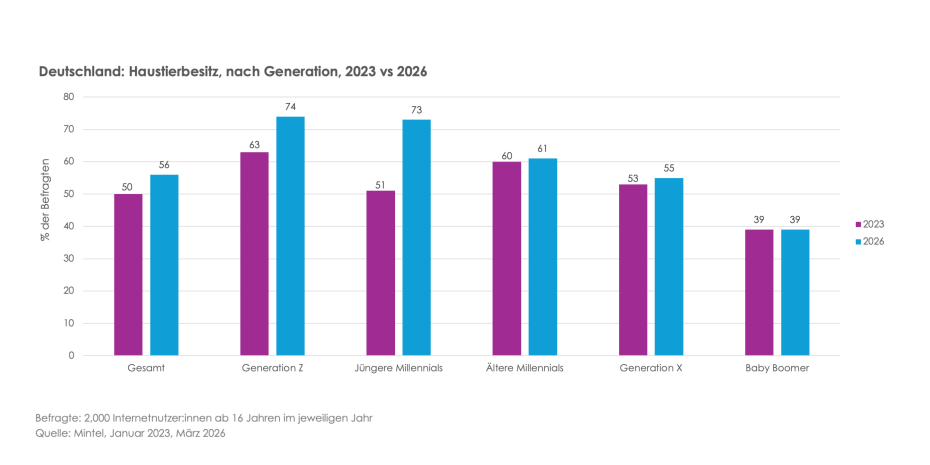
Younger generations are shaping the future of the pet market. Pet ownership has risen significantly in recent years, particularly amongst Gen Z and younger millennials. Furthermore, these groups are showing an above-average interest in acquiring more pets in the near future.
At the same time, birth rates in Germany are falling, suggesting that consumers without children are opting for pets instead. In fact, 82 % of pet owners in these younger generations see themselves as ‘parents’ to their pets, compared with 61% of pet owners in the Baby Boomer generation.
This is an attractive target group for brands. Compared with other generations, millennials are already the most likely to spend more than 200 euros a month on products and services for their pets. Together with Gen Z, they invest more frequently than average in various categories, including wellness products as well as vitamins and dietary supplements for their pets.
More online:
Male cat owners aged 16–34 represent a particularly dynamic segment. Their share has grown by 18 percentage points over the past three years. Cats offer similar emotional benefits to dogs. This is particularly relevant given that male consumers in this age group feel lonely more often than average (54 per cent compared with 31 per cent of all Germans).
In line with the growth in the number of younger pet owners, the market is shifting from reactive care towards preventative healthcare. High veterinary costs are fuelling the demand for solutions that help to prevent health problems as early as possible. A majority of people regard dietary supplements as useful for this purpose.
It is particularly interesting that pet owners who are planning to get another dog or cat are already much more likely to buy dietary supplements for their pets. For them, such products are increasingly seen as part of their pets’ long-term healthcare.
Dr. Jennifer Hendricks

Associate Principal Analyst – Consumer Lifestyles…






 Newsletter