
 Newsletter
 Shop
Shop Login
Login Menü
Menü




 4/2026
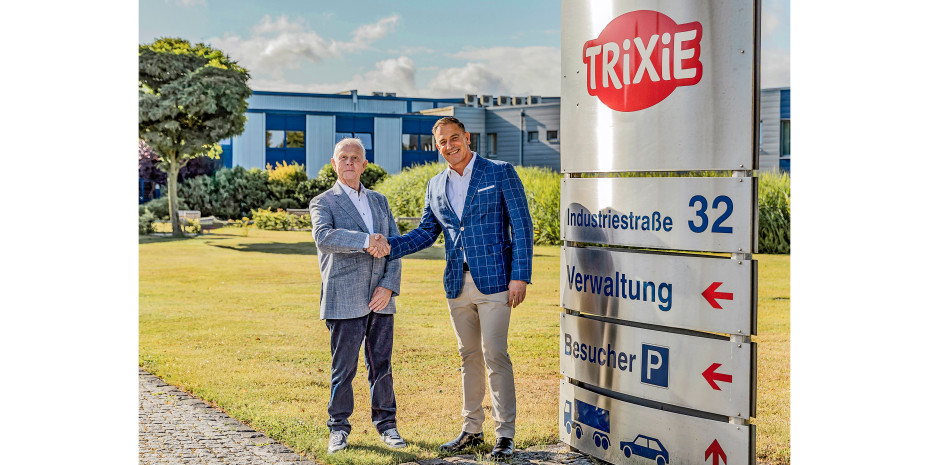
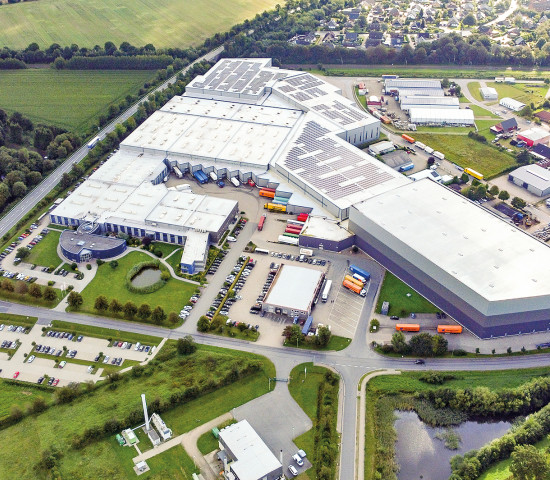
The process took a year and a half, and the outcome was confirmed at the end of July: Central Garden & Pet Company is acquiring a majority stake in Trixie Heimtierbedarf GmbH & Co. KG. For Burkhard Friedrichsen, CSO of the Tarp-based supplier of pet accessories and snacks, this means they have found their ideal candidate. ‘It’s turned out to be our absolute favourite candidate,’ he says. ‘Particularly for me, when it comes to sales and marketing, it’s naturally the ideal partner to really step up a gear in the future.’
Founded in 1974, the company employs around 600 staff, supplies more than 30,000 specialist retailers worldwide and stocks over 6,000 products for dogs, cats, birds, reptiles and small animals. Around 90 per cent of turnover is generated by its own brands, with around 500 new products added each year. Central Garden & Pet achieved a net turnover of $3.1 billion in the 2025 financial year and employs over 6,000 staff, predominantly in North America.
‘The merger with Central is a significant milestone in Trixie’s 50-year history,’ said Bonnik Hansen, founder of Trixie, in the press release. ‘When looking for a partner, it was important to us to find a company that shares our values, our corporate culture and our long-term approach.’ After all, he has no successors, and he was not keen on purely financial investors. ‘What particularly won us over were the people who have built up this company over 50 years,’ said Niko Lahanas, Chief Executive Officer of Central Garden & Pet. According to media reports, the Americans are paying around €400 million to Hansen’s charitable foundation for the 80 per cent stake.
Trixie had made it clear early on – both internally and to its customers – that founder Hansen wanted to sell his shares. ‘We are very open and transparent in our communication,’ explains Friedrichsen. The lengthy process had, of course, created uncertainty, so the sense of relief was correspondingly great. Two staff meetings held on consecutive days were organised to ensure that all of the approximately 600 employees were reached.
Central was there in person: CEO Niko Lahanas speaks German, and a German colleague – who emigrated 20 years ago and is now Head of Investor Relations there – added to the picture. Friedrichsen reports ‘unanimously positive feedback.’ Commitments were made regarding the long-term security of the site and the absence of any cutbacks. Trixie’s unique employee share ownership scheme, operated through a separate company, will also be continued.
Employees can invest in the company through this scheme and receive a return; Central has agreed to continue this arrangement. “Everyone was glad to have certainty,” says Friedrichsen. “Nothing is changing; everything will stay as it is. But we have a strong partner behind us to help us grow, both organically and inorganically – particularly in economically challenging times.”
The management team remains unchanged, comprising Dirk Jessen, Burkhard Friedrichsen and Danny Bollerey; Jessen and Volker Haak remain minority shareholders. Haak will also continue to support the company in an advisory capacity.
The market is stabilising
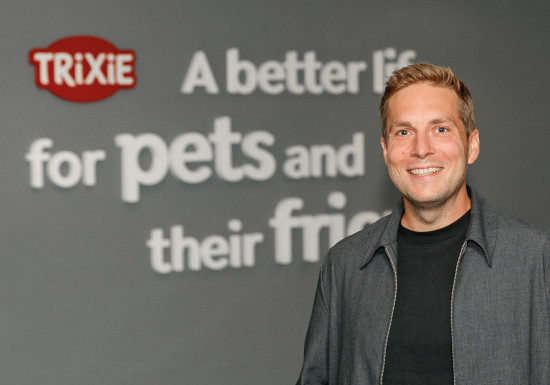
Friedrichsen puts the declines in turnover over recent years into perspective by looking at the starting point: during the Covid years, Trixie had grown by 50 per cent – but the current level remains higher than it was before the pandemic. ‘The market is now levelling off a bit,’ he says. The trend is towards cats and smaller dogs – both of which require fewer accessories.
At the same time, demand is shifting: major purchases such as dog beds and cat trees are being put on hold. Ironically, the best-selling item in the range is a self-cleaning cat litter tray, despite its high price. ‘That’s where I see the future: anything to do with problem-solving and health-related issues.’
By contrast, categories aimed at sprucing up the home are finding it harder – a trend that is also evident in furniture shops and DIY stores. ‘For us, that’s more a case of complaining on a luxury level,’ says Friedrichsen.
Snacks now account for around 30 per cent of turnover – a figure that is actually on the rise, as consumers are less reluctant to spend small amounts on their family members. ‘A mix like that – 30 to 70 per cent – is really good. It can even go up to 35 to 65 per cent at times.’ However, the focus remains on accessories. ‘Snacks are great because they’re consumables; people keep buying them,’ he says. ‘But of course, every accessory is more fun – that’s quite clear.’
Central has a stronger presence in the mass market and online in the US, whilst Trixie has been firmly established in specialist retail for decades. Friedrichsen assures us that this focus will not be altered. ‘Our distribution approach – to be a partner to specialist retailers – remains unchanged,’ he emphasises. He sees their shared task as keeping the retail space attractive to the end consumer, ‘so that they do not drift off to chemists and supermarkets’. Central paid a lot of money for a thriving, healthy business and knows little about the European market – ‘in that respect, there is absolutely no ambition to change anything’.
Kaytee and Nylabone
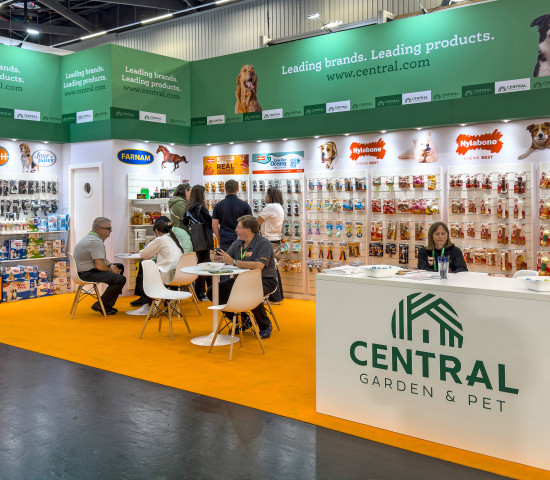
The portfolio is likely to be of particular interest to retailers: Central carries around 60 brands. Friedrichsen cites the rodent brand Kaytee and Nylabone – which is already represented in the UK via a wholesaler – as potential candidates for the European market. Individual products sold under the Trixie brand in future are also a possibility: “It doesn’t necessarily have to be a new brand.”
A faster transfer of innovation from the US is also expected, as new products tend to reach the market there sooner. In practical terms, this is likely to take effect from 2027 onwards – between the signing and closing of the deal, scheduled for early 2027, the possibilities are limited anyway.
“Nothing’s happening at the moment anyway, so we can’t do much until everyone has given their approval,” says Friedrichsen. However, analysis is already underway: “We’re taking a close look at these two product portfolios and seeing where there’s overlap.”
Trixie is set to launch functional snacks this autumn, albeit independently of Central. Health and tracking are seen as shared areas of innovation – areas for which the self-cleaning cat litter tray with an integrated scales already serves as a model. Among other things, it records the cat’s weight as well as the frequency and volume of urination. The question, however, is always, “why do we fall in love with a technical detail that is ultimately too niche?”
It remains to be seen how customs policy will affect trade. Trixie sources around 80 per cent of its goods from Asia, whilst Central produces much of its own stock in the US. It is difficult to predict how Central’s products will be imported into Europe in future. However, Tarp has plenty of experience in this area: through its US subsidiary, the company has learnt in recent years to ‘respond very flexibly’, from China to Taiwan and Thailand to Georgia.
Central Garden & Pet Company is a leading consumer goods company in the pet and garden sectors, founded over 45 years ago. With net sales of US$3.1 billion in the 2025 financial year, Central has strong manufacturing and logistics capabilities, supported by a passionate, entrepreneurial culture of growth that embraces sustainability. Central is headquartered in Walnut Creek, California, and employs over 6,000 people, primarily in North America.
Oliver Mengedoht
This is the long version of the article from the print edition of PET worldwide 4/2026.






 Newsletter