
 Newsletter
 Shop
Shop Login
Login Menü
Menü






- Retailers and suppliers: exclusive insights
- Market analyses and country reports
- Magazine in print and digital
- Latest news and archive
The pet industry thrives on its close relationship with pet owners, yet at the same time runs the risk of relying too heavily on its own intuition or the loudest voices on social media. This is precisely where the ‘Rudelreport’ (German for roughly translated ‘pack report’) comes in. This market research series is conducted by Dr Jessica Schwamborn and her agency, Die Projektmeisterei, in collaboration with PET worldwides’s German sister magazine pet, and has been providing representative studies, each from 60 to 130 slides, on the decisions and emotions of dog owners since 2025. It is also worth international companies taking a look at what makes German dog owners tick.
The inaugural study, the Rudelreport 2025/1, focused on dog ownership, covering everything from care and training to problem areas. The key added value lies in the identification of distinct owner segments. This typology clearly demonstrates that there is no such thing as ‘the typical dog owner’. Whilst only a small segment is trend-conscious, the majority tend to be more conventional. For marketing, this means that product selling points must be tailored to each segment.
The following issues
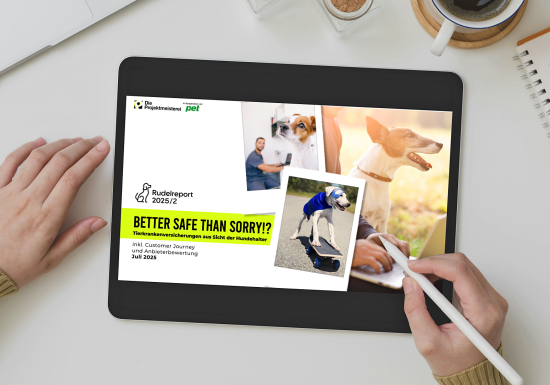
The Rudelreport 2025/2 examined the topic of pet health insurance, a market of great relevance. The findings revealed a key contradiction: 88 per cent want the best possible healthcare for their dog, but only 22 per cent have comprehensive cover. A lack of information and uncertainty are holding people back from taking out a policy.
A comparison across generations shows that Gen Z are less demanding but quick to become dissatisfied. Boomers, on the other hand, are more demanding but more loyal. When choosing a product, it is not so much the price that matters as the stability of premiums and the level of goodwill shown – a clear message, then, to providers in this market.
Indepth look at nutrition and health issues
Rudelreport 2025/3: The third representative study took an in-depth look at the topic of nutrition. The emotional bond with one’s four-legged friend shapes feeding behaviour. Variety in the bowl is the norm: around 70 per cent combine different feeding methods, often driven by a desire to do something good for their dog – but also for practical reasons.
When health problems arise, food and supplements are seen as tools for managing them. 54 per cent adjust their pet’s diet first when acute symptoms arise. Innovations work…





 Newsletter