
 Newsletter
 Shop
Shop Login
Login Menü
Menü





 4/2026
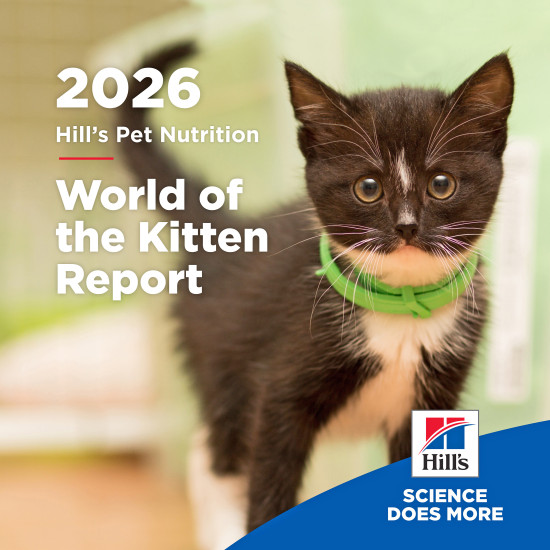
With cats increasingly overtaking dogs as the world’s most popular pet, Hill’s Pet Nutrition has published its first World of the Kitten Report, a comprehensive, evidence-based guide to kitten growth, nutrition, socialisation and veterinary care. Building on the company’s earlier World of the Cat Report, it was authored by Hill’s feline specialist Lisa Restine, DVM, DABVP (Feline), with content support from International Cat Care and validation by Hill’s international Cat Advisory Team of board-certified specialists.
At the heart of the report is a shift from reactive treatment to a proactive, evidence-based approach. In line with AAHA and FelineVMA guidelines, it designates the full first twelve months of life as a distinct pediatric period, encouraging caregivers and veterinary teams to look beyond the initial vaccination series and address kittens’ unique physical and emotional needs throughout the year.
The report also challenges several established norms. It highlights that current protocols can fail up to one third of kittens, since maternally derived antibodies may block the final core vaccine at 16 weeks; accordingly, Hill’s aligns with global experts in recommending a 26-week (six-month) FVRCP booster in place of the traditional one-year booster. It also warns against raw and freeze-dried diets for young felines because of contamination risks to kittens and their families.
On nutrition, the report frames feline pediatric feeding as a sophisticated science requiring a precise balance of protein, fat and essential fatty acids such as DHA, plus optimised mineral ratios. New proprietary research on Hill’s ActivBiome+ prebiotic blend showed measurable gut-health benefits from the earliest life stage.
Two welfare themes round out the report: the ‘Fix by Five’ initiative, noting that spaying or neutering by five months cuts mammary cancer risk by 91% and helps curb shelter overpopulation; and the kitten welfare crisis, with data showing that 44% of pre-adoption-age shelter kittens die without intervention, while robust foster programmes can achieve neonatal save rates as high as 95%.
The full report is available at hillsvet.com/felinehealth.







 Newsletter