
 Newsletter
 Shop
Shop Login
Login Menü
Menü





 6/2018
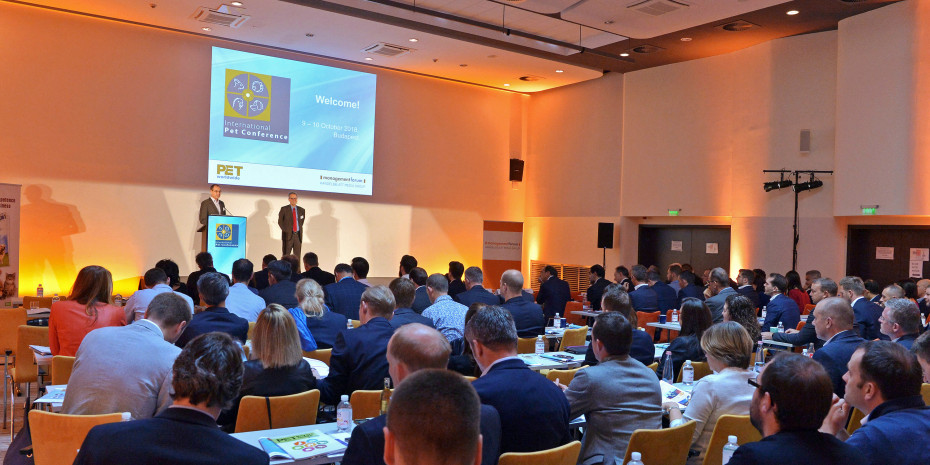
Smartphones and tablets have brought huge changes in consumer behaviour, and this extends to the pet supplies market also. How retail and industry should adapt to this and how they can best exploit the market opportunities presented by digitalisation was one of the central topics discussed at the International Pet Conference.
Bernard Meunier, CEO Europe, Middle East and North Africa at Nestlé Purina Petcare, gave the keynote speech at the conference. He stressed that data is becoming increasingly important in a digital age. Citing companies like Facebook, airbnb and Skype, he stated that these have no plants or products of their own, but are successful because they act as a marketplace. Their strength lies in being optimally informed about their users.
"The new reality is above all personalised," said Meunier. A consumer survey revealed that 84 per cent of consumers want to be treated as a person, and not as a number. 76 per cent expect companies to understand their needs and level of expectations and 59 per cent consider tailored engagement based on past interactions very important. Nestlé Purina is responding to this changed demand profile in various ways. The acquisition of online platform Tails.com gives the company the capability to feed thousands of dogs, but with their own recipe.
Consumer demand for greater individuality is being met by Nestlé Purina Petcare likewise through its acquisition of the French pet digital media platform Wamiz. The platform enables the pet food manufacturer to offer current pet care information to pet owners. Meunier highlighted the European hub for digital & e-commerce in Barcelona as the company's third line of response.
The fact that more and more pet supplies retailers are embracing the opportunities of the digital age was also clear from the presentations given by Zooplus, Fressnapf and Tiendanimal. Andrea Skersies, the longstanding and soon to depart chief marketing officer of Zooplus, Europe's leading online retailer for pet products, recounted the company's success story. She recalled the launch in 1999, when Zooplus took its first steps into the still new world of e-commerce. Now the online retailer is one of the leading pet product retailers in Europe, with a presence in 30 European countries and an annual turnover of 1.1 bn euros. Skersies described how the company has succeeded in turning pet owners who buy from Zooplus into regular customers. She pointed to the high level of investment in logistics and to the various measures taken by the company to attain cost leadership and maintain its competitiveness. At the same time, however, she did not hide the fact that a steadily accelerating erosion of margins was becoming widespread in many merchandise categories in the face of growing competition.
Torsten Toeller, founder, proprietor and chairman of the board of management at Fressnapf, outlined in Budapest the transformation of the company, which operated for a long time solely as a bricks-and-mortar retailer, into an internationally active omnichannel outfit which regarded its focus on customer needs as its strength.
"We focus on building an emotional relationship between customer and company and steer all corporate units in line with the priorities of our customer," said Toeller. The Fressnapf boss made it clear, however, that this strategy was not a rapid implementation project; it was a process extending over many years that would only lead to the desired result by focusing and prioritisation.
Bernard Meunier, CEO Europe, Middle East and North Africa at Nestlé Purina Petcare, gave the keynote speech at the conference. He stressed that data is becoming increasingly important in a digital age. Citing companies like Facebook, airbnb and Skype, he stated that these have no plants or products of their own, but are successful because they act as a marketplace. Their strength lies in being optimally informed about their users.
"The new reality is above all personalised," said Meunier. A consumer survey revealed that 84 per cent of consumers want to be treated as a person, and not as a number. 76 per cent expect companies to understand their needs and level of expectations and 59 per cent consider tailored engagement based on past interactions very important. Nestlé Purina is responding to this changed demand profile in various ways. The acquisition of online platform Tails.com gives the company the capability to feed thousands of dogs, but with their own recipe.
Consumer demand for greater individuality is being met by Nestlé Purina Petcare likewise through its acquisition of the French pet digital media platform Wamiz. The platform enables the pet food manufacturer to offer current pet care information to pet owners. Meunier highlighted the European hub for digital & e-commerce in Barcelona as the company's third line of response.
The fact that more and more pet supplies retailers are embracing the opportunities of the digital age was also clear from the presentations given by Zooplus, Fressnapf and Tiendanimal. Andrea Skersies, the longstanding and soon to depart chief marketing officer of Zooplus, Europe's leading online retailer for pet products, recounted the company's success story. She recalled the launch in 1999, when Zooplus took its first steps into the still new world of e-commerce. Now the online retailer is one of the leading pet product retailers in Europe, with a presence in 30 European countries and an annual turnover of 1.1 bn euros. Skersies described how the company has succeeded in turning pet owners who buy from Zooplus into regular customers. She pointed to the high level of investment in logistics and to the various measures taken by the company to attain cost leadership and maintain its competitiveness. At the same time, however, she did not hide the fact that a steadily accelerating erosion of margins was becoming widespread in many merchandise categories in the face of growing competition.
Torsten Toeller, founder, proprietor and chairman of the board of management at Fressnapf, outlined in Budapest the transformation of the company, which operated for a long time solely as a bricks-and-mortar retailer, into an internationally active omnichannel outfit which regarded its focus on customer needs as its strength.
"We focus on building an emotional relationship between customer and company and steer all corporate units in line with the priorities of our customer," said Toeller. The Fressnapf boss made it clear, however, that this strategy was not a rapid implementation project; it was a process extending over many years that would only lead to the desired result by focusing and prioritisation.

Rafael Martinez-Avial, CEO of the Spanish pet store chain Tiendanimal, is also working consistently on a strategy to make his company fit for the digital age. "Our aim is to be the omnichannel reference company in Europe that fosters respect, coexistence and enjoyment between pets and people through permanent innovation and building a bond of trust with our customers," explained Martinez-Avial. Tiendanimal's 40-plus high street stores and its online shop already each account for 50 per cent of its sales. He cited expansion of the logistics, an improvement in operations and continuing to foster the omnichannel strategy in Iberia as future goals.
Other presentations also highlighted how online business was gaining significance alongside the bricks-and-mortar trade. On the other hand, most also made it clear that the hype surrounding e-commerce and digitalisation of the sector should not be a reason to neglect the bricks-and-mortar stores, which still constitute the core business of many companies. Interesting ways of appealing more strongly to the emotions of pet owners on the sales floor were revealed in particular by the presentations of Matthias Pohl, CEO of Kölle Zoo, and Lionel Desclée and Thierry Le Grelle of Tom & Co.
Other presentations also highlighted how online business was gaining significance alongside the bricks-and-mortar trade. On the other hand, most also made it clear that the hype surrounding e-commerce and digitalisation of the sector should not be a reason to neglect the bricks-and-mortar stores, which still constitute the core business of many companies. Interesting ways of appealing more strongly to the emotions of pet owners on the sales floor were revealed in particular by the presentations of Matthias Pohl, CEO of Kölle Zoo, and Lionel Desclée and Thierry Le Grelle of Tom & Co.
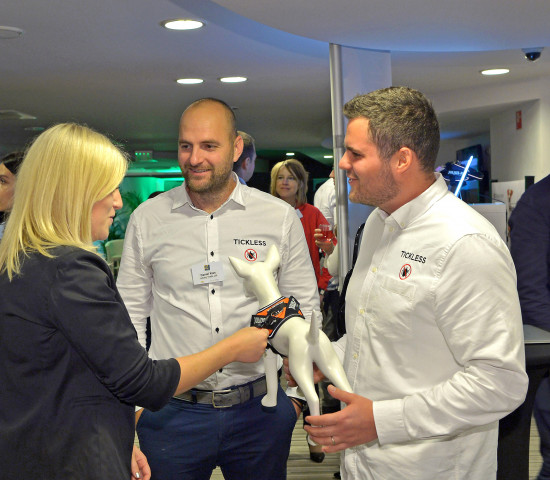
Plenty of networking took place at the conference.







 Newsletter