
 Newsletter
 Shop
Shop Login
Login Menü
Menü




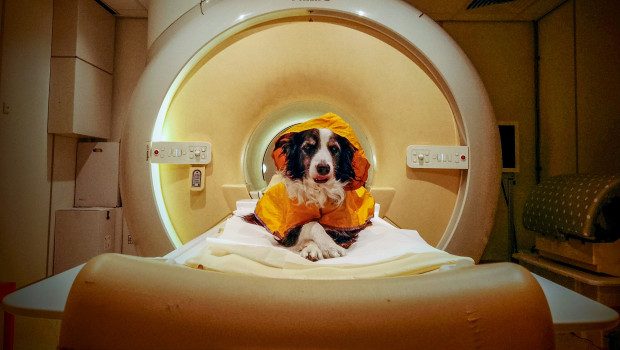
A research team at the University of Vienna has used MRI to examine how dogs' brains respond to human facial expressions. The findings: a smile is processed differently from any negative expression – and fear, anger and sadness each produce distinct patterns of activity.
That dogs are good at reading human faces has long been known. The neurobiological basis of this ability, however, has remained largely unexplored. The group led by Laura Cuaya and Raúl Hernández-Pérez at the Department of Cognition, Emotion, and Methods in Psychology has now published its data in the Cell Press journal iScience.
In a first experiment, eight dogs in the scanner were shown images of strangers with either happy or neutral expressions. Happy faces activated the temporal cortex, with activity extending into the caudate nucleus – a region associated with reward processing. According to Cuaya, this suggests that happy human faces may carry emotional significance for dogs.
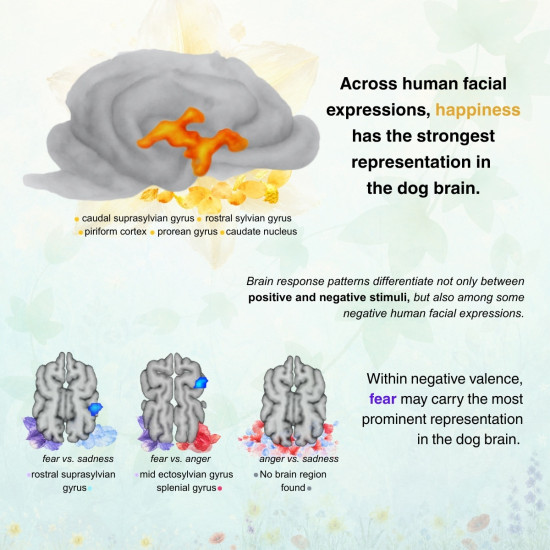
In a second step, twelve dogs were shown images expressing happiness, anger, fear and sadness. The regions identified earlier responded to happiness alone. A whole-brain analysis using machine learning additionally revealed patterns distinguishing fear from anger and sadness. According to the authors, this is the first evidence that dogs differentiate between specific negative facial expressions.
The researchers themselves qualify their results. They do not mean that dogs experience emotions in the same way humans do. Only family dogs took part; free-roaming animals may process human signals differently. And outside the scanner, a dog does not read a still image but combines facial expression with body language, tone of voice and scent. The team's next step is to investigate how dogs integrate these signals.
For Cuaya, the findings carry a practical message: dogs are emotional beings that evolved alongside humans, and recognising this could change how owners communicate with them and care for them.
Original publication: Cuaya, L. V. et al.: Dog brain representations of human facial expressions: Encoding happiness and differentiating specific negative expressions. iScience, 2026. DOI: 10.1016/j.isci.2026.116900




 Print - digital - online