 Newsletter
 Shop
Shop Login
Login Menü
Menü



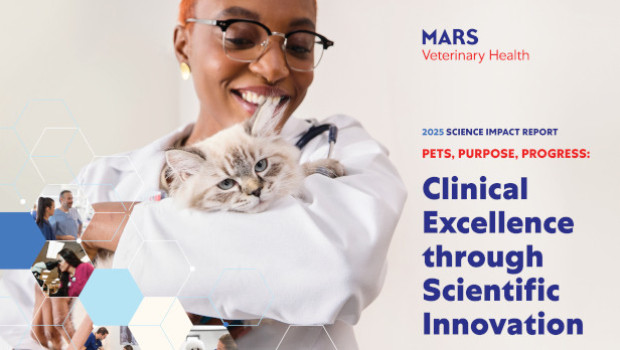
Mars Veterinary Health has published its 2025 Science Impact Report – Pets, Purpose, Progress: Clinical Excellence through Scientific Innovation – a comprehensive annual review of the veterinary research and initiatives across its globally connected network that are advancing veterinary science and clinical excellence.
The new report highlights a year of accelerated veterinary science research across Mars Veterinary Health’s globally connected veterinary care network. In 2025, this included more than 500 peer-reviewed publications authored by its clinician scientists and global initiatives – from clinical research infrastructure and One Health (a framework that connects human, animal, and environmental health) breakthroughs to continued progress in sustainability science and new health outcomes tools. ’
‛Our second annual Science Impact Report is more than a record of progress – it’s a blueprint for the future of veterinary care,’ said Dottie Brown, VP of Science and Healthcare Innovation at Mars Veterinary Health and leader of its Medical Affairs Science Team. ‛By harnessing science, innovation, and sharing best practices, we are driving clinical excellence today while laying the foundation for a healthier, more sustainable future for generations of pets to come.’
Content from clinical research to sustainability
Each year, clinician and technician scientists across Mars Veterinary Health leverage some of the industry’s most comprehensive datasets – sourced from anonymized data from millions of pets served across the global network every year – to conduct veterinary research and deliver actionable insights that elevate the standards of pet healthcare.
Report highlights include:
• Research across the spectrum of health conditions from common to rare conditions, machine-learning applications for clinical decision support, patient safety and more.
• Global One Health progress for pets, people, and planet: Identifying a novel rabies variant, detecting a human erythroparvovirus analogue in cats, studying mercury exposure and greenhouse gas emissions in veterinary practice and more.
• Mars Petcare Biobank fuels genetic discovery like the SLAMF1 variant linked to canine atopic dermatitis.
• Unifying global veterinary clinical research.
• Pioneering pet health by incorporating Owner Reported Outcomes.
• Driving more sustainable veterinary care by avoiding 200 tons of waste.
• Improving access to care in collaboration with Michigan State University.
The full 2025 Science Impact Report is available at https://marsveterinary.com/veterinary-science/reports/2025-impact/.



 Print - digital - online