
 Newsletter
 Shop
Shop Login
Login Menü
Menü






- Retailers and suppliers: exclusive insights
- Market analyses and country reports
- Magazine in print and digital
- Latest news and archive
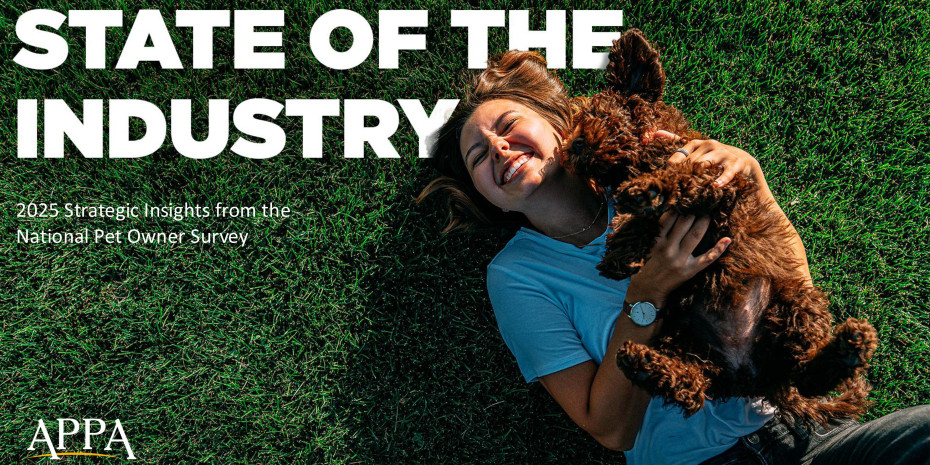
U.S. pet industry expenditure reached $158 bn in 2025 and is projected to climb further to $165 bn in 2026, according to the 2026 State of the Industry Report oft he American Pet Products Association (APPA). Yet the headline figure is only part of the picture: the more telling development, the association stresses, is the changing behaviour behind the growth: Ownership remains strong, spending is holding up even under economic pressure, and different generations are shaping the market in distinct ways.
Pet ownership has become firmly embedded in everyday life. It held steady at 95 million U.S. households, underlining that pets are now a given rather than a discretionary part of the home. Even as consumers grow more cautious overall, they are not giving up pets – they are adjusting how they spend on them. For brands, that distinction is decisive: the industry’s foundation is solid, but growth now depends on aligning with evolving expectations.
The shift is clearest in dog ownership, which rose from 51% to 53% of U.S. households in 2025, adding roughly four million new dog-owning homes. At the same time, buying behaviour is becoming more measured and price sensitivity is rising. Brands that communicate value clearly – through quality, function or longevity – are best placed to stand out.
Cats are also having their moment: ownership climbed to 39% of households, or 53 million homes, with Gen Z and Millennials driving much of the gain. Better suited to smaller spaces and flexible routines, cats appeal strongly to younger pet parents, turning a once-secondary category into a meaningful growth driver.

Across the board, pets remain essential household members even as budgets tighten. About half of owners report unchanged spending, while a growing share say they are spending less – but rather than a weakening market, this reflects a reallocation toward essentials such as food and veterinary care and away from discretionary buys. A particularly striking shift comes from Gen X: often overlooked in favour of younger consumers, the generation posted a 12% rise in ownership, spanning dogs, cats and smaller pets such as birds and reptiles. As Gen X enters the empty-nest phase, pets increasingly fill a role that blends companionship with…





 Newsletter